
Get Your Civil Business Noticed on LinkedIn
By Gianna Stead | SEO Manager, Maisona | 3 min read
Most civil contractors have plenty of good material for LinkedIn (it’s sitting in the crew’s phones). LinkedIn for construction companies only pays off when you post it, because someone from a council or a head contractor will look you up before they ring.
They’ll read your last few posts. A job in progress, with a line on what it is, tells them more than a capability statement does. Video helps too, and our post on short-form video in B2B marketing goes into how.
Who’s Looking at Your Page
Council project officers and procurement teams look. So do estimators at the bigger contractors who need subbies. They won’t tell you they did. You find out when you’re on the tender list, or you don’t.
They want to know you’ve done this kind of work and that it went safely. Recent posts answer both before anyone picks up the phone.

What to Post
Jobs in progress
Say what the job is and how far along it is. “Trenching for a water main upgrade, day four” is a full post. Shoot from the road edge, not the cab, so it looks like the job and not a stock photo.
How you do the work
Anyone who’s run a civil job takes a good, hard look at the photo. They’ll look at your traffic control and how you’ve shored the trench. A caption with the pipe size or the compaction spec tells them you did it by the book.
Safety
Post the toolbox talk. Then the near miss you wrote up, and what changed because of it, or how you avoiding having near misses in the first place. Procurement teams score safety on tenders, so a page that shows it saves them a question.
Your people
Name your people, like the new apprentice or the supervisor on the current job. Work goes to businesses with faces attached, and a name beats “our dedicated team”.
Finished jobs
Post it at handover, with the client’s okay: what it was, how big, what they needed. A testimonial from the client is the best thing you’ll ever put on the page, and handover day is the best time to get one.
Check the Photo Before You Post
One bad photo undoes a lot of good posts. Look at the background first:
- Anyone missing hi-vis, glasses or gloves, including the operator behind the roller
- An open trench with no edge protection
- A client’s sign or a neighbour’s fence you hadn’t meant to show
- Faces of anyone who hasn’t consented to be in the photo
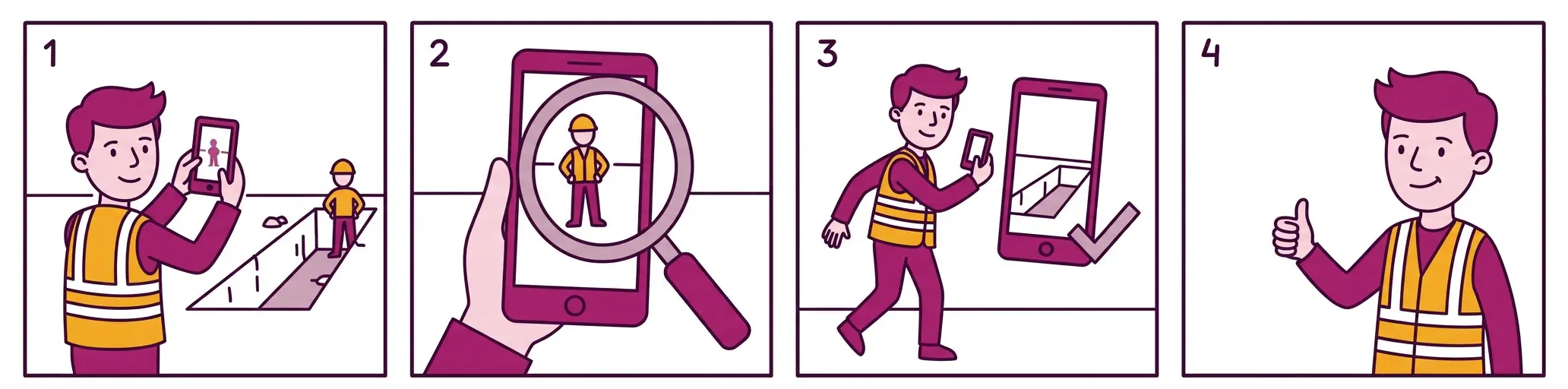
Safe Work Australia’s guidance says workers must use their PPE as instructed, and the safety managers reading your page know it, and will be on the look out for compliance.
How Often Should You Post?
LinkedIn says companies that post weekly see higher engagement. One company page post a week is realistic when nobody on staff does marketing full time. Directors and project managers usually get more reach from their own profiles than the page ever will, so get two or three of them posting too.
If you only protect one habit, make it the Friday photo dump. Everyone drops their best site photos in one shared folder, and once a month someone writes four captions from it. That’s a month of posts sorted.
Posts to avoid
- Stock photos of hard hats and handshakes
- Motivational quotes that have nothing to do with your work
- Industry news reposted with no comment from you
- Posts that ask for work and offer no proof
Is It Working?
Add “how did you hear about us?” to every enquiry form and every phone call. LinkedIn rarely gets the last click before a call, so analytics undersell it. The answers tell you whether a post got you on a tender list.
Weekly is a strong default, and your numbers might say otherwise. A crew with great photos every week can post more. A smaller outfit can post less if each post has real detail. Write it the way you’d say it on site, which is the point of our post on how authenticity builds trust.
If your best work isn’t showing up where buyers look, talk to Maisona about a social media and content plan built around your projects.
Frequently Asked Questions
How often should a construction company post on LinkedIn?
Aim for one company page post a week, plus posts from directors or project managers. LinkedIn says companies that post weekly see higher engagement.
What should a civil contractor post on LinkedIn?
Jobs in progress, how you do the work, safety, your people, and finished jobs. Each one answers a question buyers ask before they shortlist you.
Should the company page or individual staff post?
Both. The page gives you a home for official updates, and directors and project managers usually reach more people from their own profiles.
What shouldn’t a construction company post?
Stock photos, generic quotes, reposted news with no comment, and posts that ask for work without showing any.
How do you check a site photo before posting?
Look at the background for missing PPE, open trenches without edge protection, other people’s signs or fences, and people that haven’t agreed to appear.
How do you know if LinkedIn is working?
Ask every new enquiry how they heard about you. LinkedIn rarely gets the last click, so the answer tells you more than page analytics.