
Authenticity Builds Trust. Create Content your Competitors Can’t
By Chelsea Light | Founder, Maisona | 8 min read
Open ten websites in your industry. Not to buy anything, just to look. You’ll probably notice a few things pretty quickly. The photos feel slightly off, not wrong exactly, but not quite real either. The kind of image where the workers are too clean, the site is too tidy, and everyone is looking at something just off camera. The copy reads like someone answered a brief rather than wrote something they believed. And the contact forms all ask for the same four fields in the same order, because they all came from the same template.
This is what happens when an entire industry discovers AI content tools at the same time. Everyone gets access to the same shortcuts, and the output starts to look like it came from the same place. Because it did.
The solution isn’t better AI prompts. It’s the stuff AI can’t produce for you: assets that come from actually doing the work. Here’s what that looks like in practice.
Real photos beat stock images every time
A lot of businesses have never taken a decent photo of their own work. Their websites are full of images that feel like they were chosen from a dropdown menu: generic hard hats, generic handshakes, someone pointing at a laptop. And they wonder why potential clients can’t picture working with them.
Buyers can tell the difference between a real job site and a staged one. So can Google. Authentic project photography signals that you’ve actually done the work, in real conditions, for real clients. That’s harder to fake than a well-written paragraph.
You don’t need a professional photographer. A phone and decent light is enough to start. Take 5 minutes and read our tips on taking better photos with your phone. What you do need is a habit. Brief your site team to send photos at key project milestones. Build it into your project close-out process. Over six months you’ll have more usable content than most agencies could create for you.
We created this simple framework below for our clients to help teams record project updates
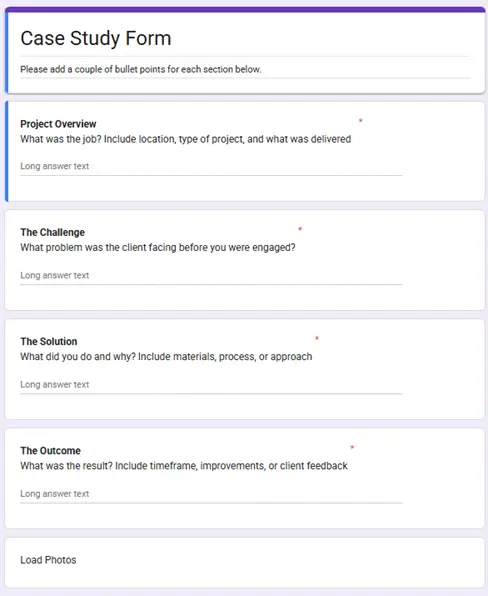
Grab a copy of our template for your own team available here.
Reviews are the only content you can't write yourself
If someone Googles your business name tonight, what do they find? For a lot of businesses, the honest answer is not much. Maybe a few reviews from a couple of years ago. Maybe nothing.
Reviews from real clients are the one piece of social proof that no competitor can manufacture. They also directly influence whether a potential buyer picks up the phone or keeps scrolling through your competitors.
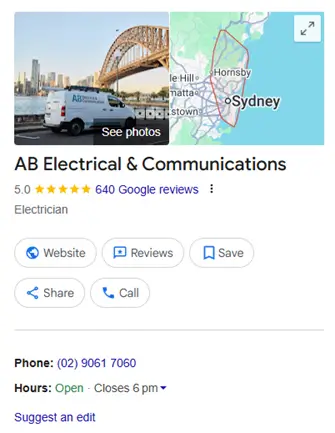
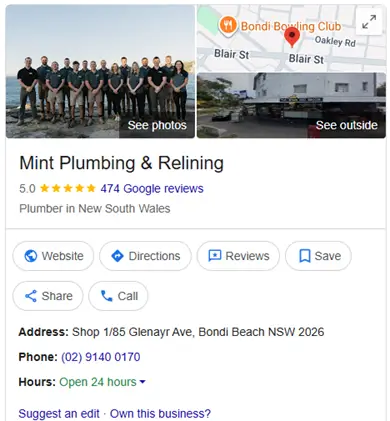
The businesses with strong review profiles aren’t luckier than you. They just have a process. It doesn’t need to be complicated:
- Send a direct Google review link to every client when the job wraps up, not weeks later when the moment has passed
- Put it in the post-project email as a single clear ask, not buried under three paragraphs of sign-off
- Give one person in your business ownership of this, with a monthly check on progress
- Respond to every review within a few days, including the ones you’d rather ignore
- Set a real target: two new reviews per month is achievable for most businesses and meaningful over a year
A business with forty recent reviews looks completely different to one with twelve old ones, even if the quality of work is identical.
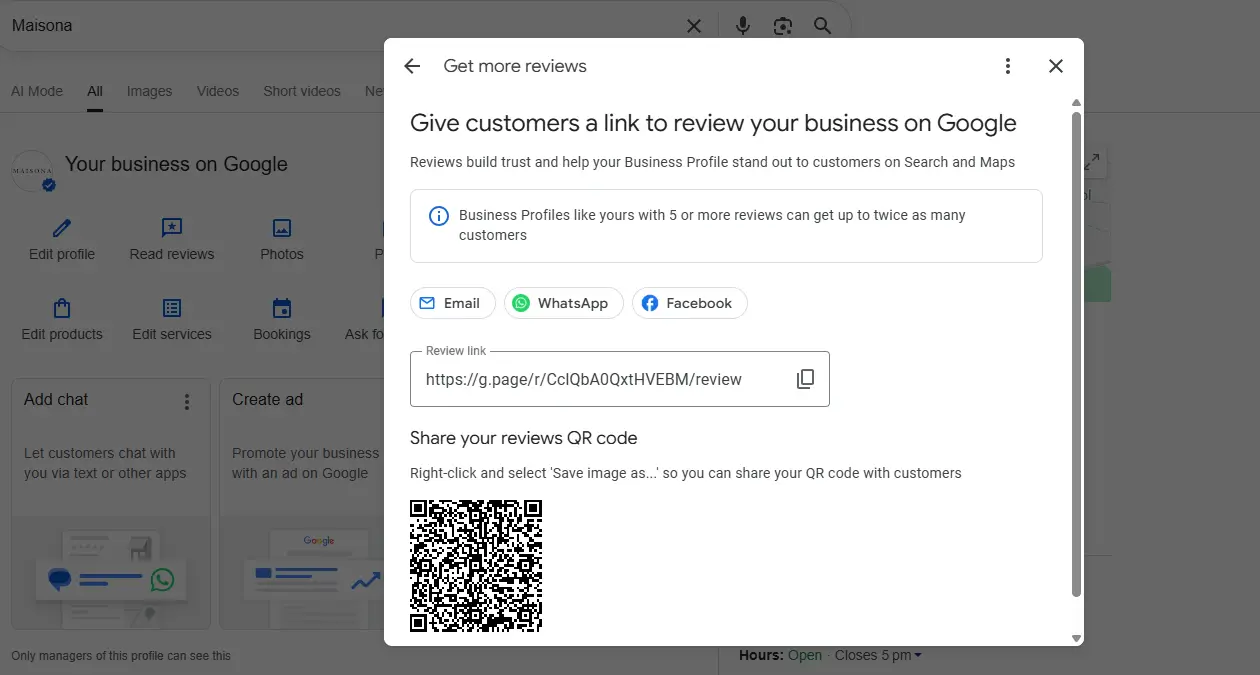
To share your review link, go into your Google My Business Profile.
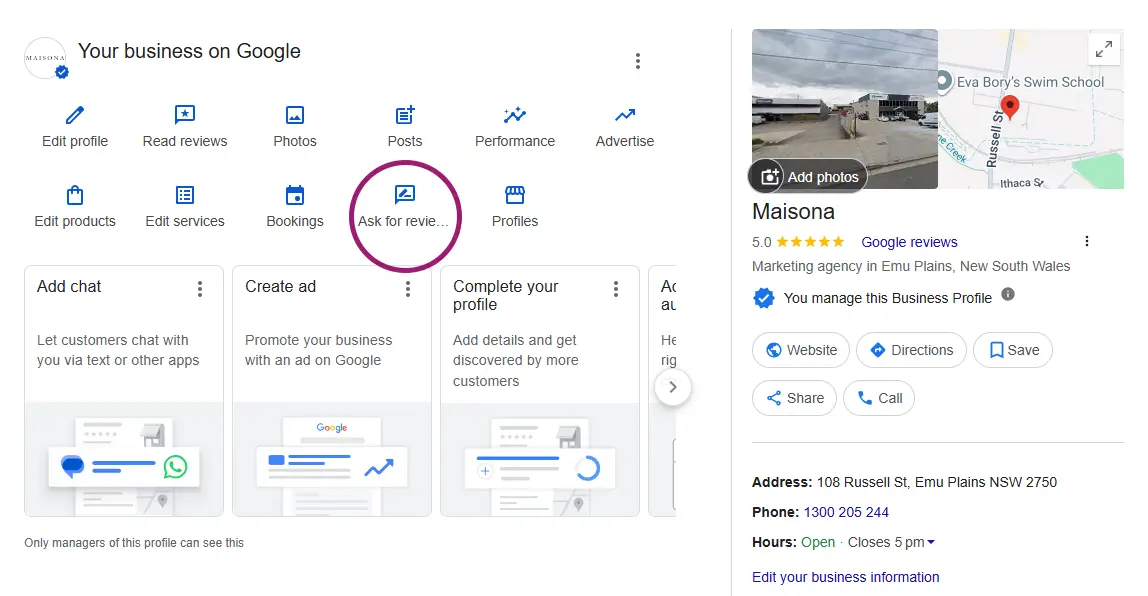
Then copy the link to pass onto your customers. A QR code is also available if that option works for your customer.
Awards and trade press do something your website can't
There’s a difference between saying you’re credible and having someone else say it. Your website can claim anything. An industry award, a feature in a trade publication, or a listing with a recognised association carries weight that self-published content simply doesn’t have.
Most businesses in construction and industrial sectors don’t pursue this at all. They assume it’s for the big players or requires a PR budget they don’t have. It doesn’t. Start by finding two or three relevant awards in your space and applying. Being shortlisted is useful. Winning gives you a signal you’ll reference for years.
Getting a named expert from your business into a trade publication is the same idea. One contributed article in an industry outlet creates an external reference point that builds authority in a way no amount of in-house blogging can replicate.
The data sitting in your own business is worth more than you think
Every project you’ve completed has information inside it that no competitor can access. What does this type of job actually cost? What usually causes delays? What products or methods hold up and which ones cause problems six months later? What questions do clients always ask that nobody answers honestly online?
A lot of that knowledge lives in your head, or in your team’s heads, and never makes it onto the page.
One of the most underused ways to surface it is simply getting people on the phone. A fifteen-minute call with a recent client, asking what they were worried about before they hired you and what they’d tell someone else considering it, will give you more useful content than a month of internal brainstorming. Where it’s permitted and with consent in place, recording those calls gives you something even better: the exact language your clients use to describe their own problems, which is often very different to how you’d describe them.
The same applies to your own reports, quotes, and job records. Most businesses are sitting on years of project data and never use it. Typical costs for a given scope of work. How long jobs of a certain type actually take. The variables that push a price up or pull it down. That’s information buyers are searching for and not finding anywhere.
You don’t need to publish a research report. A blog post that says ‘here’s what a concrete cutting project in Sydney typically costs, and here’s what drives the price up or down’ is more valuable to a buyer than ten posts about the importance of choosing the right contractor. Using real numbers drawn from real jobs and real reports isn’t just good content strategy, it’s how you build credibility with buyers who are used to vague answers and are actively looking for someone willing to be specific.
Be consistent, not everywhere
A lot of businesses try to maintain a presence on every platform and end up with a LinkedIn page that hasn’t been updated since 2022 and a Facebook account with four posts. That’s worse than having nothing. It tells a buyer you started something and gave up.
Pick the channels where your buyers actually spend time and show up there consistently. For most businesses in construction and industrial B2B, that’s LinkedIn for professional visibility, Google for search, and email for the people already in your world. Three channels done well beat six channels done badly. We are social’s Digital 2026 gives great insight as to where people are spending the most of their time when researching brands and relaxing, showing the increase of social media platforms when doing brand research.
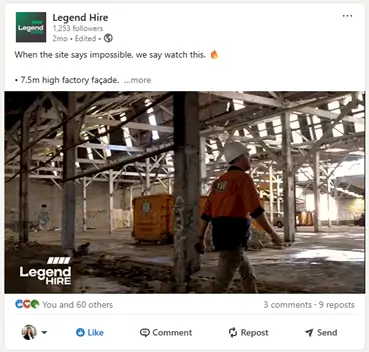
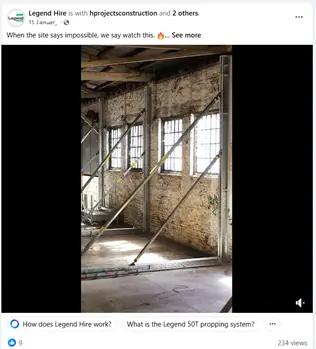
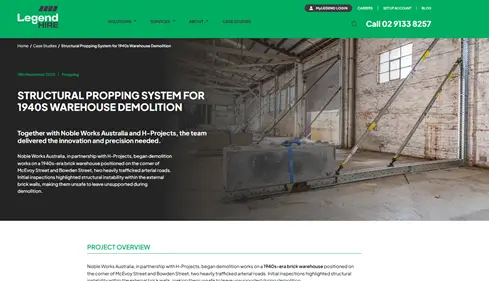
The easiest way to sustain this is to repurpose content. A project you just completed can become a case study on your website, a LinkedIn post, a short video walkthrough, and a paragraph in your next client email. One piece of real work, four pieces of content. You’re not creating more, you’re getting more out of what you already have.
Why this is more urgent now then it was two years ago
The volume of AI-generated content online is increasing every month. Search engines are getting better at identifying it. Buyers are getting better at sensing it even when they can’t name it. The result is that the floor for what counts as having a content presence is rising, while the ceiling, the content that actually builds trust, is getting harder to reach with shortcuts.
The five things above are not new ideas. Real photos, genuine reviews, third-party credibility, original data, and consistent presence. None of this is secret knowledge. The gap is in the doing. Most businesses acknowledge they should be doing these things and then don’t, because it takes more effort than writing a blog post about industry trends.
That’s the opportunity. The businesses that build these assets and maintain them will look noticeably different to the ones that don’t. In a market where everyone’s starting to look the same, different is worth a lot.
Frequently Asked Questions
How long before any of this actually makes a difference?
Reviews move fastest if you put a proper process in place. You can have ten new reviews within a couple of months if you’re consistent. Project photography accumulates quickly once your team is briefed. Awards and editorial coverage take longer, typically three to six months before you start seeing the trust signals show up. None of this produces a dramatic spike. It builds, and after twelve months the compounding effect is significant.
We're a small team. Do we have the capacity for this?
Yes, if you keep it simple. The review process is a link in an email. The photography process is a brief to whoever is already on site. The data content is a conversation with your most experienced person, written up clearly. None of these require a dedicated marketing hire. They require a decision to make it a habit and one person to own it.
Our competitors are already doing some of this, are we too far behind?
If they have genuine project photography and a strong review profile, you need to catch up, but catching up is possible. Where it gets interesting is the data content and the authority signals. Most businesses in your sector are not doing those things at all, because they take sustained effort. Don’t just aim to match what competitors are doing. Aim to go further in the areas they haven’t bothered with yet.
Want to build content assets your competitors can't copy?
Maisona works with businesses in civil, construction, and industrial sectors to build marketing that’s grounded in how your buyers actually think and what they’re actually looking for. Book a discovery call with our team.