
By Chelsea Light | Founder, Maisona | 5 min read
Ranking starts long before algorithms evaluate relevance. It begins with whether Google decides your page deserves to be indexed at all. Understanding that process is one of the most practical things you can do for your site’s search performance.
Google’s crawler, called Googlebot, finds your pages through three main routes:
Of these, links are the most powerful. A page with no inbound links and no sitemap entry is essentially invisible to Googlebot. This is one reason why a well-structured site with logical internal linking will consistently outperform a site that publishes content in isolation. It is also one of the SEO fundamentals that never change, regardless of how Google’s algorithm shifts.
Google’s search algorithm is not a single system. Search Engine Journal’s guide to how search algorithms work describes it well: think of it as a collection of interconnected algorithms, each with a specific job, collaborating on a final decision about your page. Search Engine Land’s complete history of Google algorithm updates gives a useful picture of just how frequently those systems are adjusted and refined.
Crawling a page does not guarantee it gets indexed. After Googlebot retrieves your page, Google’s systems assess whether it is worth adding to their database. They are looking at:
Pages that pass that filter get indexed. Pages that do not may be crawled repeatedly and never appear in search results. If you want to understand more about how Google evaluates content quality, our piece on what’s happening with SEO in 2026 covers the principles that have held consistent across every major algorithm shift.

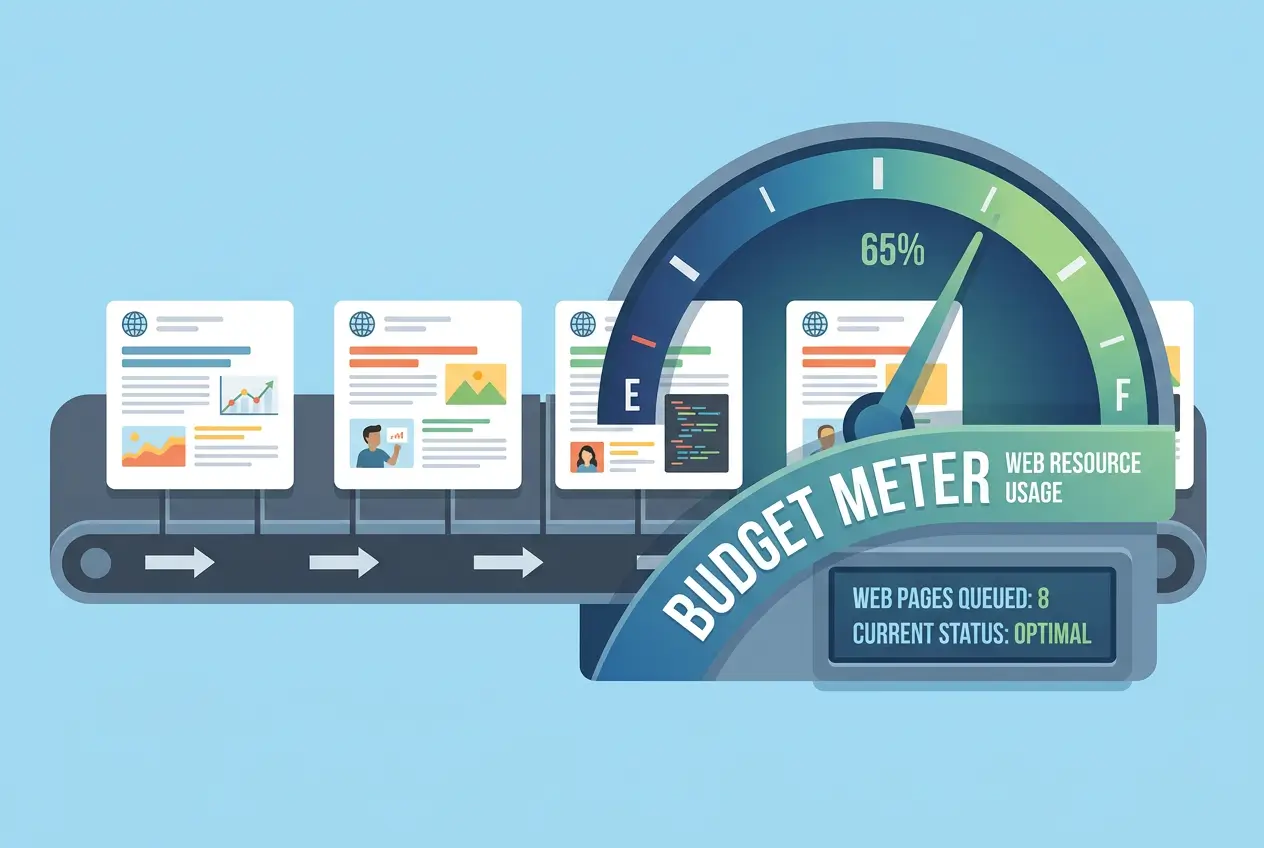
Google does not crawl every page on your site every day. Each site gets allocated a crawl budget, meaning how many pages Googlebot will check within a given timeframe.
As confirmed by Google’s Search Central team, including in a detailed post by Gary Illyes on how Googlebot crawls and processes pages, that budget depends on two things: how fast Google can crawl without overloading your server, and how much it wants to crawl based on your site’s authority and how frequently content changes.
For most content sites with fewer than a few thousand pages, crawl budget is not a pressing concern. For larger sites, it matters significantly. You can protect yours by:
It is also worth knowing that Googlebot has a file size limit. According to Search Engine Roundtable, Googlebot only crawls the first 15MB of a file by default, with exceptions for PDFs at 64MB and other file types at 2MB. For most pages this is irrelevant, but for large single-page documents or resource files it is worth keeping in mind.
How you link internally tells Googlebot which pages on your site matter most. Google’s own crawling documentation confirms that internal link structure directly influences how the crawler prioritises and navigates a site.
A logical structure looks like this:
This is not just a crawling consideration. It affects how Google distributes ranking authority across your site. Pages buried deep in a site structure with few internal links pointing to them will consistently underperform pages that are well-connected. If your site’s internal structure needs work, Maisona’s SEO service covers exactly that.
According to Google’s Search Central documentation, content needs to provide genuine value, match what people are searching for, and demonstrate E-E-A-T: Experience, Expertise, Authoritativeness, and Trustworthiness.
In a 2023 interview with Kate Toon on The Recipe for SEO Success podcast, Google’s John Mueller made the point clearly. Build a genuinely good business and genuinely good content first. There is no meta tag that replaces the hard work. Get the substance right, then show Google and your users that you have done so.
That sounds simple, but the practical implication is that content written to fill a page, hit a word count, or rank for a keyword without serving a real reader will struggle. Google’s quality filters are increasingly effective at identifying the difference.
When Google finds multiple versions of the same content, it picks one as the canonical version and may suppress or ignore the others. You can influence which version it chooses by:
This matters more than many site owners realise. Duplicate content does not just dilute rankings; it wastes crawl budget on pages that add no value to the index.
If pages are not appearing in search results despite being published, the most common causes are:
The fastest diagnostic tool is Google Search Console. The Coverage report shows which pages are indexed, which are excluded, and why. Checking it regularly is one of the most useful habits in SEO.
With AI-generated content now flooding search results, Google’s quality filters are under more pressure than ever. Understanding how to stay visible in that environment, including how to appear in AI-generated answers rather than just traditional results, is covered in our guide on how to get cited in AI models.

The fundamentals here are not complicated, but they do require consistency:
Google’s guidance has been consistent for years: build for users first, optimise for search engines second. That is not just good SEO practice. It is good business.
If this raised questions about your own site, the Maisona blog has more on SEO, content, and digital strategy, or you are welcome to reach out directly if you want a conversation.
No. Google allocates a crawl budget to each site, which determines how many pages Googlebot will check within a given timeframe. Sites with duplicate content, broken pages, or bloated sitemaps can waste that budget on pages that should not be crawled at all. Prioritising your best content through internal linking and a clean sitemap helps Googlebot focus where it matters.
Crawling is when Googlebot visits and reads a page. Indexing is when Google decides that page is worth adding to its search database. Not every crawled page gets indexed. Google filters out thin content, duplicate pages, and low-quality content before deciding what to include. A page can be crawled and still never appear in search results.
Several factors can prevent a page from being indexed. Common causes include thin or duplicate content, accidental blocking through robots.txt, missing or outdated XML sitemaps, poor internal linking structure, and content that does not meet Google’s quality standards. Checking Google Search Console for coverage errors is the fastest way to diagnose the problem.
Internal links help Googlebot understand which pages on your site are most important. Pages that receive more internal links from high-value pages are crawled more frequently and given more weight in the index. Keeping your most important content within three to four clicks of your homepage, and using descriptive anchor text rather than generic phrases, signals to Google what deserves attention.
E-E-A-T stands for Experience, Expertise, Authoritativeness, and Trustworthiness. Google uses these signals to assess whether content is worth indexing and ranking. Content that demonstrates real knowledge, cites credible sources, and answers genuine user questions consistently performs better than content written primarily to fill a page. It is not a single algorithm but a set of quality signals that influence how Google evaluates your site overall.
There is no fixed schedule. Google recrawls pages based on how often content changes and how popular the site is. A frequently updated site with strong authority will be recrawled more often than a static site with few inbound links. Submitting an updated XML sitemap through Google Search Console and publishing fresh content regularly both encourage more frequent crawling.