
Marketing Budget Template: How to Allocate Spend Across Channels in 2026
By Chelsea Light | Founder, Maisona | 7 min read
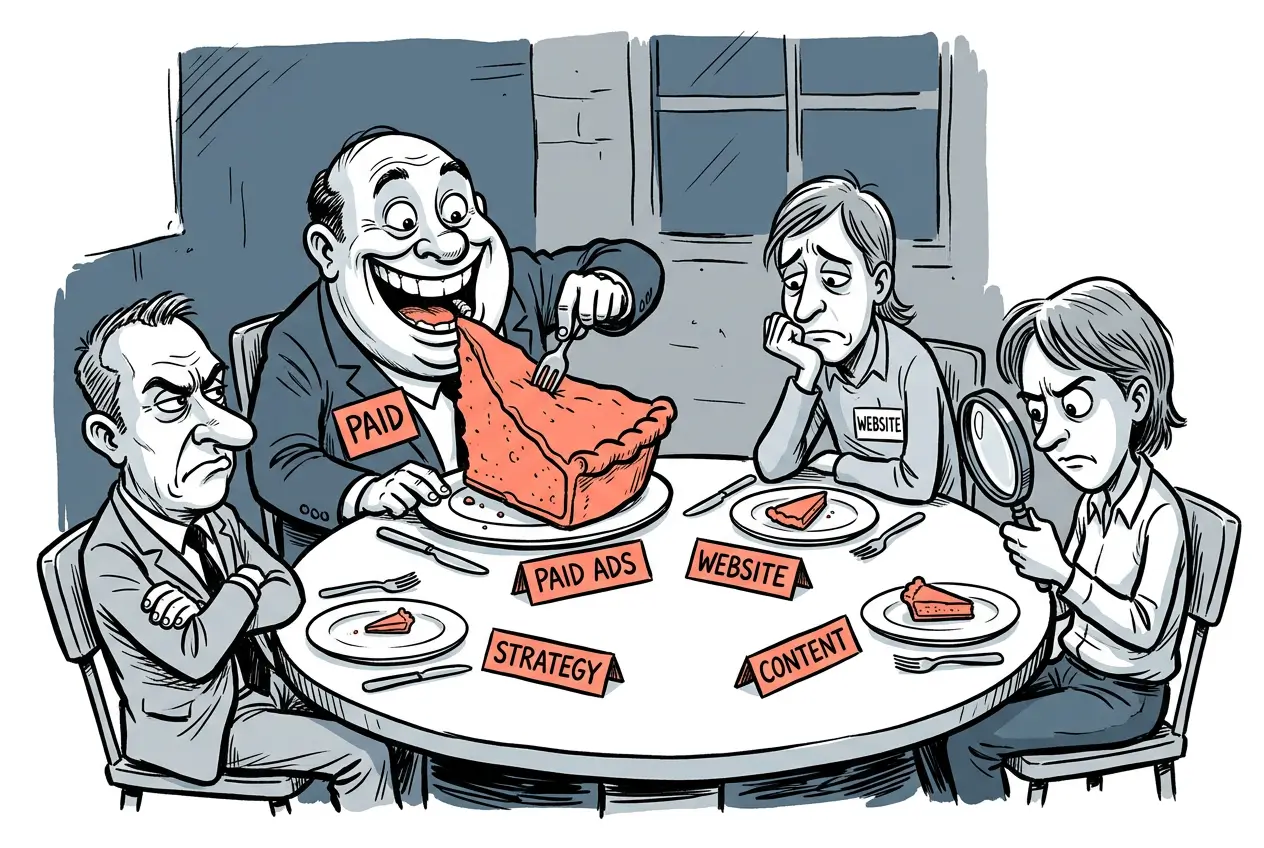
Knowing how much to spend on marketing is only half the problem. The harder question is where to put it. Most businesses that build a marketing budget template end up with a spreadsheet divided on gut feel, whatever the last agency recommended, or wherever the loudest internal voice points. That’s how you end up spending 60% of your budget on Google Ads while your website converts at 1% because nobody invested in fixing the landing pages.
The how much question matters less than most people think. If you’ve already worked through how much your business should be spending on marketing, the next step is making sure that spend is distributed across the right channels in the right proportions. This guide covers exactly that: how to allocate your marketing spend in 2026, with a structure you can adapt to your own business.
Why Channel Allocation Matters More Than Total Spend
Two businesses can spend the same amount on marketing and get completely different results. The difference is almost always allocation.
According to the CMO Survey, the average marketing budget across industries sits at around 10% of revenue, but B2B companies consistently spend less, typically between 3 and 6%. For Australian SMEs, it’s even lower. The total spend isn’t what separates the businesses generating leads from the ones generating reports. It’s how the money is distributed across channels and whether those channels are working together.
A business putting 80% of its budget into paid ads with nothing going to the website or content is buying traffic with nowhere useful to send it. A business putting 80% into SEO with no paid support may build long-term authority but struggle to fill the pipeline in the short term. The goal is to get the balance right for your specific situation.
The Framework: Four Budget Categories
Rather than thinking channel by channel, start by grouping your spend into four categories. This keeps allocation tied to business function rather than individual tactics.
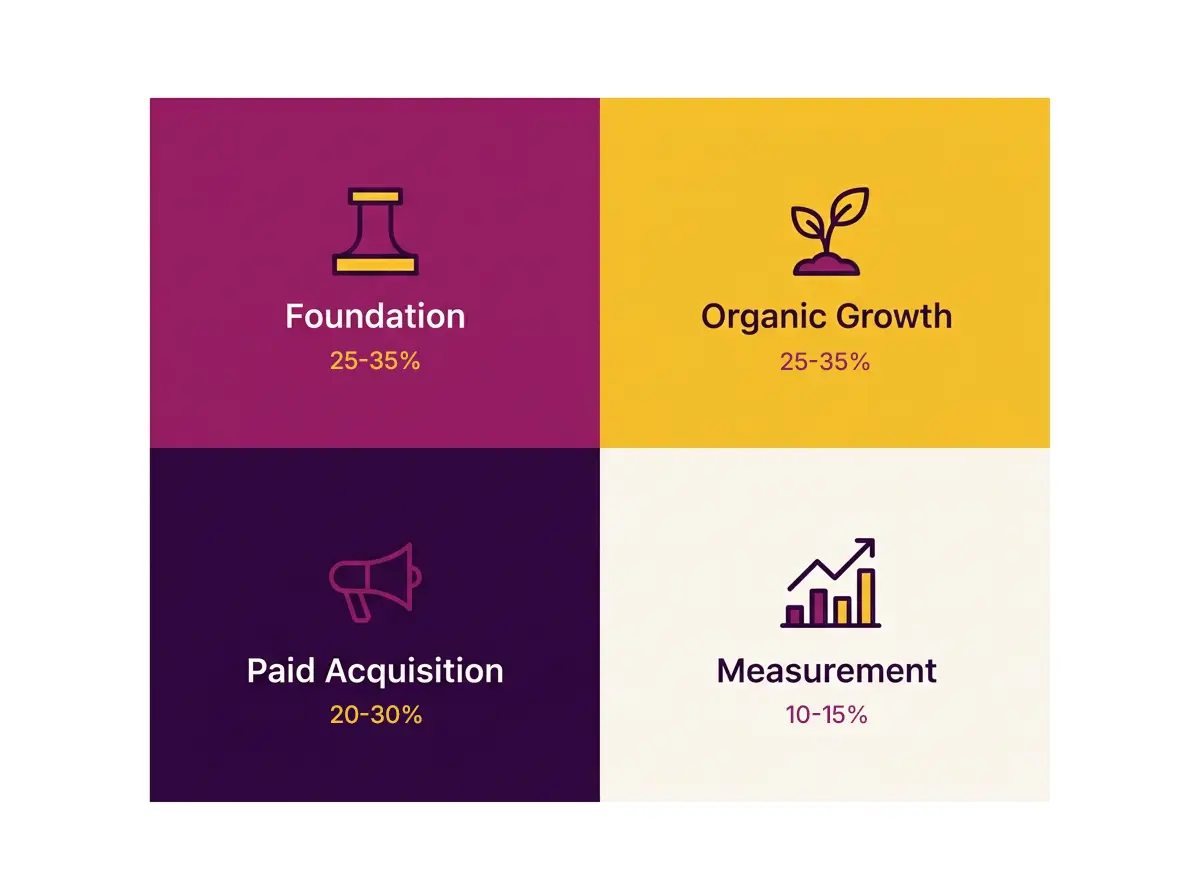
Foundation (25 to 35% of budget)
This covers the assets everything else depends on: your website, your brand, and your core content. If the foundation is weak, every other dollar works harder for a worse result.
For most B2B companies, this means website design and maintenance, brand consistency across all materials, and foundational content like case studies, service pages, and spec sheets. If your website hasn’t been updated in three years, this category should sit at the higher end of the range until it’s fixed.
Your website is the one channel you own completely. Every other channel, whether it’s Google, LinkedIn, or a trade publication, sends people there. If the destination doesn’t convert, the source doesn’t matter.
Organic Growth (25 to 35% of budget)
This is where your long-term lead generation lives. SEO, content marketing, and any activity designed to build visibility that compounds over time.
SEO for B2B businesses in Australia is still the highest-ROI channel for most companies when measured over 12 months. It takes longer to build than paid media, but the cost per lead drops as your rankings strengthen. A blog article you publish today can generate enquiries for years if it’s targeting the right search terms.
Budget here covers keyword research, technical SEO, content production (blogs, guides, case studies), and link building. For businesses starting from scratch, lean toward 35%. For businesses with an established organic presence, 25% is enough to maintain and grow.
Paid Acquisition (20 to 30% of budget)
Paid channels fill the gap while organic builds. Google Ads, LinkedIn campaigns, and retargeting are the most common for B2B companies in Australia.
The advantage of paid is speed. With the right campaign structure in place, you can start generating leads within days. The disadvantage is that it stops the moment you stop paying. For a detailed look at how paid fits into a broader plan, Maisona’s guide to marketing campaign planning covers how to connect channel spend directly to pipeline targets.
Allocate paid budget based on your lead generation targets. If you need 30 leads per month and your cost per lead is $100, that’s $3,000 in monthly ad spend. Add management fees and creative costs on top. According to the Gartner 2025 CMO Spend Survey, paid media already accounts for nearly a third of the average marketing budget across large enterprises. For most B2B companies, the exact paid allocation should follow your goals and cost-per-lead data, not a benchmark set for a different business at a different stage.
Don’t put more than 30% of your total budget into paid unless your organic channels are already performing well. Otherwise, you’re building a lead generation model that collapses the moment you reduce spend.
Measurement and Strategy (10 to 15% of budget)
This is the category most businesses skip entirely, and it’s the reason so many budgets feel like they’re not working.
Someone needs to plan the marketing strategy, track results, and make adjustments. That means reporting dashboards, analytics setup, monthly performance reviews, and the strategic thinking that ties all channels together.
If you don’t have an internal marketing manager, this is where an outsourced partner earns its value. Not to run individual campaigns in isolation, but to make sure every campaign connects to a commercial goal and that results are visible.
Without this category, you’re spending money on channels without knowing which ones are producing results.
How to Adjust the Template for Your Business
The percentages above are a starting framework. Here’s how to shift them based on where your business sits.
- Outdated or underperforming website: Shift more toward Foundation. There’s no point driving traffic to a site that doesn’t convert. Fix the destination before you spend on the journey.
- New entrant or launching into a new market: Weight Paid Acquisition higher in year one. You need leads while your organic presence builds. Plan to shift that allocation toward Organic Growth in year two as SEO gains traction.
- Strong organic traffic but poor conversion: Foundation needs attention. The traffic is there but the website isn’t turning visitors into enquiries. That’s a UX and content problem, not a traffic problem.
- Running ads for 12 or more months with flat results: Reallocate some Paid budget to Measurement and Strategy. The issue is likely targeting, messaging, or landing page quality rather than budget size.
A Sample Allocation for a $100K Annual Budget
To make this concrete, here’s what a $100,000 annual marketing budget might look like for a mid-size manufacturer or distributor.
Foundation (30%): $30,000 allocated to website improvements, brand materials, and core content like case studies and service pages.
Organic Growth (30%): $30,000 allocated to SEO, blog content, technical site health, and link building. Expect meaningful organic lead growth from month six onward.
Paid Acquisition (25%): $25,000 allocated to Google Ads, with approximately $2,000 per month in ad spend and the remainder covering campaign management and landing page development.
Measurement and Strategy (15%): $15,000 allocated to monthly reporting, quarterly strategy reviews, analytics, and campaign performance tracking.
That’s around $8,300 per month. For a business doing $5M to $20M in revenue, that sits comfortably within a 2 to 5% of revenue range and covers a complete marketing function.
Build the Budget Around the Business
A structured approach to budget allocation is only useful if it reflects your commercial goals, your competitive position, and the current state of your digital presence. The percentages give you a starting point. The decisions behind them are what make the money work.
If you’re dividing budget across channels without a clear marketing strategy connecting them, you’re spending more than you need to for less than you should be getting.
Maisona works with manufacturers, distributors, and contractors across Australia. If your current spend isn’t producing the pipeline it should, talk to our team about building a budget and strategy that’s tied to real commercial targets.

Frequently Asked Questions
What is a marketing budget template?
A marketing budget template is a framework for dividing your total marketing spend across categories like website, SEO, paid advertising, and strategy. It helps you allocate budget based on business goals rather than guesswork, and gives you a structure to track spending against results.
How should a B2B company split its marketing budget?
A practical starting split for most B2B companies is 25 to 35% on foundation (website and brand), 25 to 35% on organic growth (SEO and content), 20 to 30% on paid acquisition (Google Ads, LinkedIn), and 10 to 15% on measurement and strategy. Adjust the balance based on your growth stage and which channels are already performing.
How much of a marketing budget should go to Google Ads?
Paid search should typically sit at 20 to 30% of your total marketing budget. The exact figure depends on your lead generation targets and cost per lead. Don’t over-invest in paid media if your website isn’t converting well or if your organic channels are underfunded.
Do I need a marketing strategist if I have a small budget?
Yes. A smaller budget makes strategy more important, not less. Without someone planning the allocation and tracking results, you’re more likely to waste spend on channels that aren’t producing. Allocating 10 to 15% of your budget to strategy and measurement prevents the other 85 to 90% from being wasted.