
Your Website Has Investors Reading It Too
By Gianna Stead | SEO Manager, Maisona | 5 min read
When we start a website project with a group of companies, we ask early on who the site really has to convince. The answer nearly always begins with customers, then widens out. Investors and the owners of businesses you might acquire will be reading it too. So will senior candidates, usually with three other employers open in other tabs. Corporate website design has to hold up for all of them, and most won’t fill in a form to tell you how it went.
That’s a different brief from the one most B2B sites answer. A lead generation website has one measure, so the whole build points at the form. Group and corporate sites work to a slower clock. The decisions it shapes tend to arrive months later, through a broker, a recruiter, or a call from someone you haven’t met.
Why Investors and Acquirers Read Your Site First
Pitcher Partners’ Dealmakers research found overseas acquirers behind half of all Australian deals in the first six months of 2026. The same research puts succession planning at the top of the list of mid-market deal drivers. For a family-owned industrial or manufacturing group, that often means the people sizing you up sit offshore. They can’t drive out to the yard, so they form a first impression from the website and the LinkedIn page beside it.
Partners and financiers work through something similar. A head contractor building a subcontractor list wants evidence of scale and governance. Continuity is what a financier looks for behind a trading name. In our experience both settle on a working view inside a couple of minutes, and neither tends to ask a question the site should have answered. Present five capable businesses without making clear that one company owns them, and the reader has to do that arithmetic. Plenty won’t bother.

Corporate Website Design Starts With the Sitemap
In most of the group builds we’ve worked on, structure has caused more trouble than design. The homepage usually looks fine. What’s missing is a clear answer to the three questions a serious reader arrives with. What does the group own, where does it operate, and who runs it? Those answers often sit across four unrelated pages. Sometimes they aren’t on the site at all.
Tapex Group is a useful example. The business runs five operating companies across Australia, New Zealand and the United Kingdom. The Rossi family has owned it since 1957. Its previous website ran to four pages and a set of brand logos, so the individual brands came through clearly enough. The corporate story, the scale, the leadership and the employer proposition weren’t there. Visitors were reading a substantial group as a loose collection of small businesses.
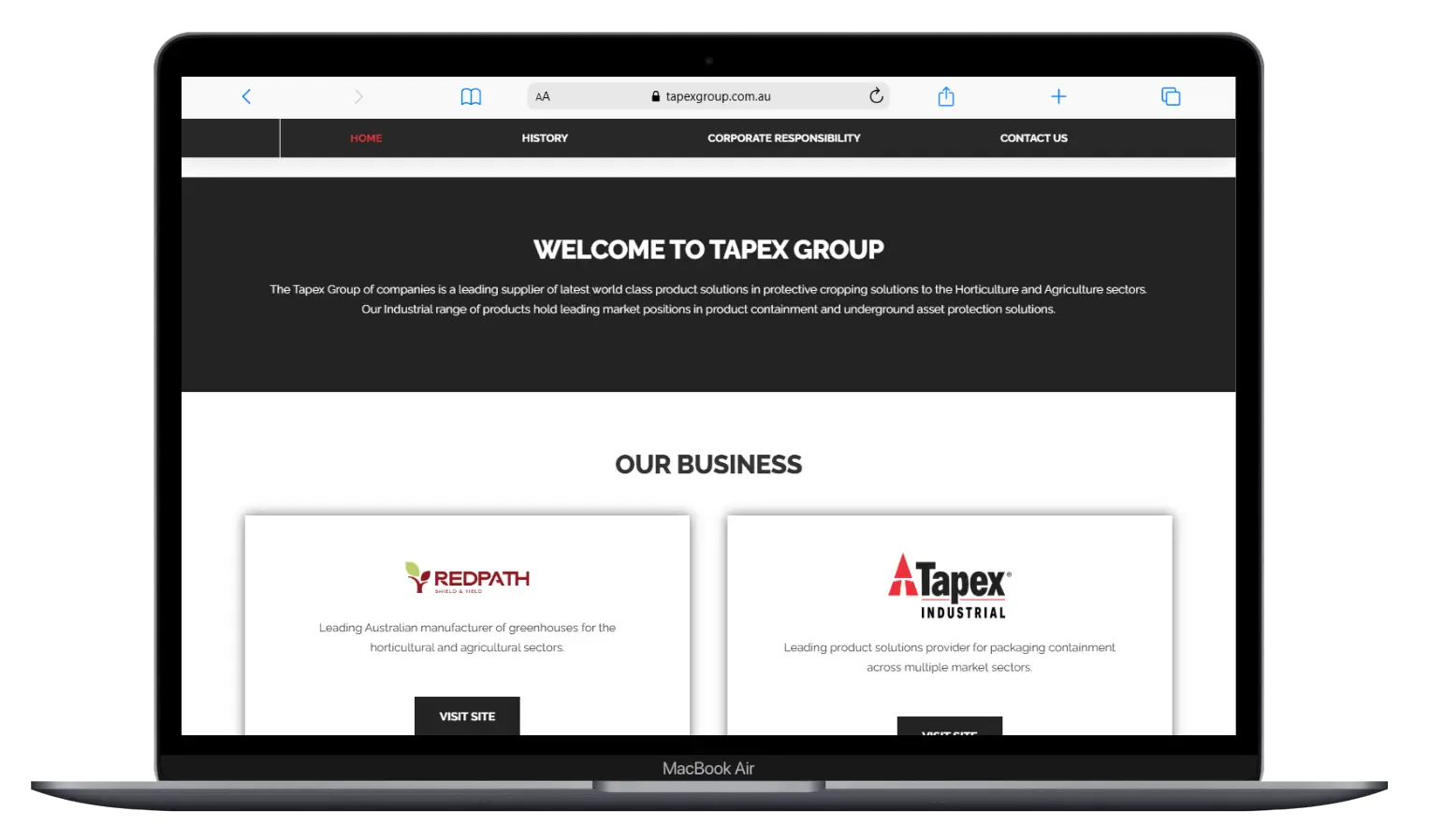
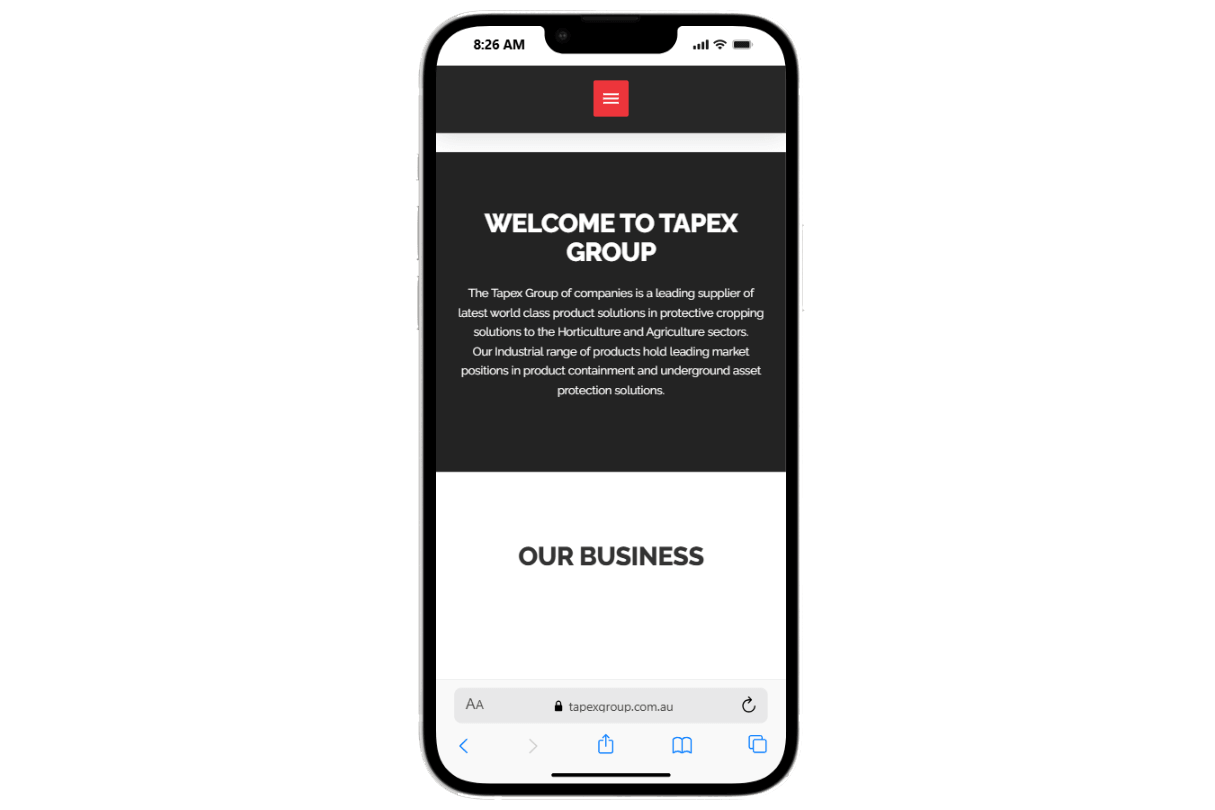
Maisona’s website design process settles the sitemap before any visual work starts. On this project we set four priorities and let them drive the structure: an enterprise narrative for credibility, proper pages for each operating business, culture and careers content to attract talent, and one consistent experience site-wide. The Tapex Group case study covers how it came together.
The same structural questions are worth putting to any group site, whatever the sector:
- What the group owns, said plainly on the homepage instead of left to a wall of logos
- Where it operates, by country and by market, not just a head office address
- Who runs it, with names and roles a due diligence team can match against LinkedIn
- What it has built and when, with dates attached
- How to work there, with real roles in real locations
Groups that answer those five well tend to field fewer basic questions, and their first conversation with a serious reader starts further along. Where two or three are missing, some readers will email to ask and others will quietly move on.
What to Put on the About and History Pages
Corporate history pages tend to fall back on adjectives. Proud heritage, trusted since, decades of experience. A reader can’t check any of it, and it reads much the same on a competitor’s site. It does very little for someone trying to work out whether you’re the real thing.
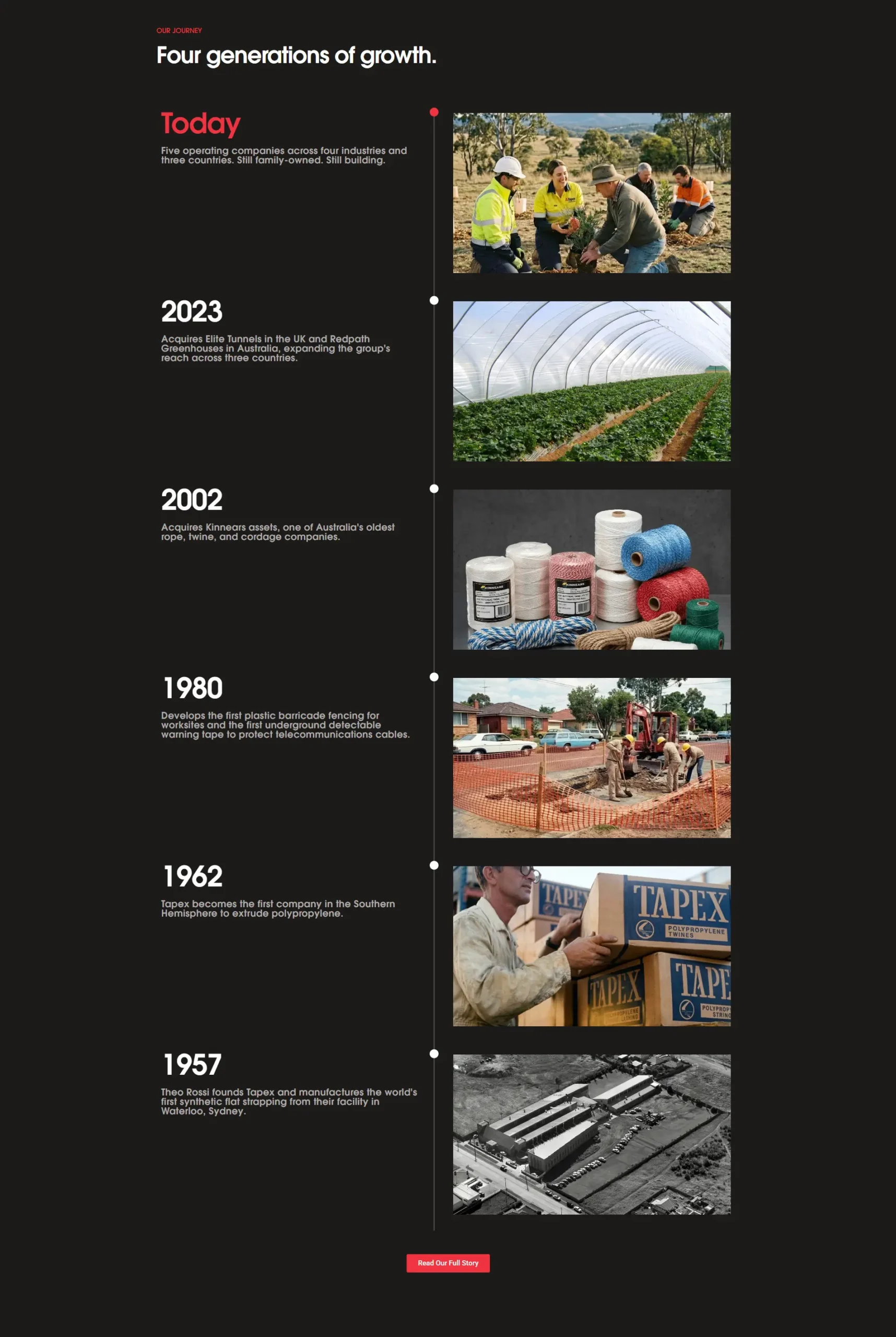
Tapex had an archive of historical photography the previous site had never drawn on. The rebuilt journey page now runs ten milestones. It opens on an 1881 Villa and Rossi storefront and closes on the 2023 purchases of Elite Tunnels in the UK and Redpath in Australia. In between sit the Southern Hemisphere’s first polypropylene extrusion in 1962 and the Kinnears acquisition in 2002. Each milestone carries an image from the archive, so a reader gets dates and photographs to weigh up.
A lot of established industrial businesses have this material somewhere. It tends to sit in a filing cabinet, or on the hard drive of someone who’s been there twenty years. It’s worth asking around before you commission another round of stock photography.
Why Careers Content Belongs on a Corporate Site
If you’re competing for engineers, project managers and trades, the careers section is doing commercial work. Infrastructure Australia’s 2025 Infrastructure Market Capacity Report puts the national infrastructure workforce at 204,000 people. It estimates a shortage of 141,000 as at October 2025, and projects the peak to pass 300,000 workers by mid-2027. Regional shortages are forecast to quadruple over the same period.
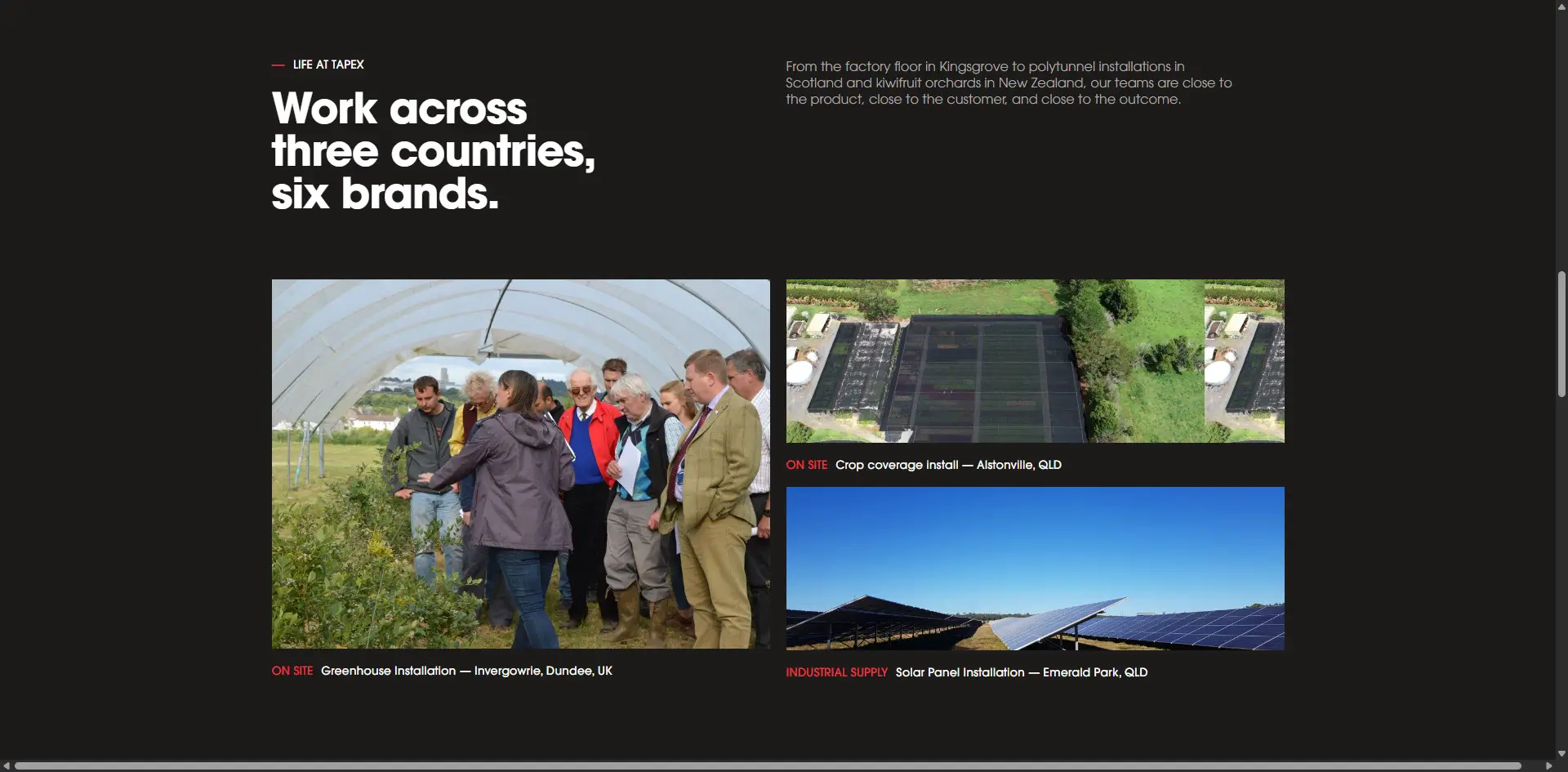
In that sort of market, a candidate with options usually reads the company before reading the job ad. They want to know who owns the business, whether it’s growing, where the work sits and what the place is like day to day. Tapex now carries careers and culture content for its teams in three countries, alongside the corporate story instead of behind a contact form. Adding it costs very little at build stage. What it does require is deciding, while the sitemap is being set, that candidates are one of the audiences the site has to serve.
How Do You Measure a Site That Isn't Built for Enquiries?
You measure it on how well briefed people are by the time they reach you. That’s less tidy than counting form submissions, but a few signals hold up in practice.
The most useful is the quality of your inbound approaches. When a recruiter, broker or prospective partner opens with accurate detail about the group’s structure or history, the site has done that briefing for you. It’s also worth asking new hires and shortlisted candidates what they looked at before applying, since they’ll usually tell you in plain terms. On the analytics side, engaged time on the leadership, history and industries pages tells you more than page views do. Someone working through due diligence reads very differently from someone browsing. If your business development team quietly stops attaching capability PDFs to emails, that’s a fair sign the site now covers that ground.
We’d suggest reviewing all of this over a year, not a quarter. The decisions involved move slowly, and one strong month tells you very little. Taken together, these signals give you a reasonable read on whether the site is doing its share of the work before anyone picks up the phone.
Is your website presenting a smaller or older version of the business than the one investors, partners and candidates meet in person? Maisona can review what you have and show you where the gaps sit. We work with growth-focused businesses in construction, industrial and manufacturing sectors across Australia and New Zealand. Talk to our team about what a strategy-first corporate build would look like for your group.
Frequently Asked Questions
What is a corporate website and how does it differ from a lead generation site?
A corporate website explains and evidences the whole company instead of converting traffic into enquiries. It serves investors, acquirers, partners and candidates alongside customers. A lead generation site points every page at a form. Larger groups usually need the corporate structure with conversion paths built inside it.
How should a group of companies structure its website?
Start with an enterprise narrative, then give each operating business its own page beneath it. Corporate story, leadership, markets and careers each need a section of their own. A visitor should be able to see what the group owns, where it operates and who runs it. Tapex Group rebuilt its sitemap around those four priorities before any design work began.
Do investors and acquirers look at company websites?
Yes, and usually before making any approach. Pitcher Partners’ Dealmakers research found overseas acquirers behind half of all Australian deals in the first six months of 2026. Many of those buyers assess a target long before they visit. What the site says about ownership, leadership, markets and growth shapes that first read.
Does careers content belong on a corporate website?
It does whenever you’re competing for skilled people. Infrastructure Australia projects the national infrastructure worker shortage will pass 300,000 by mid-2027, so candidates have options and use company websites to narrow them down. Content covering locations, teams and growth answers the questions a job ad can’t.
How do you measure a website that isn't built to generate enquiries?
Look at how well briefed your inbound approaches are, and ask candidates and new hires what they read before applying. Track engaged time on the leadership, history and industries pages. Those signals show whether the site is doing the pre-contact work. Review them over a year, since the decisions they influence move slowly.