
What Is Omnichannel Marketing? (And Does Your Budget Need It?)
By Chelsea Light | Founder, Maisona | 4 min read
You’ve probably seen the term “omnichannel marketing” thrown around in every second LinkedIn post this year. It sounds expensive. It sounds complicated. And if you’re running a mid-size manufacturing or distribution business, it probably sounds like something built for retail giants, not for companies selling industrial doors or mining consumables.
But here’s the thing. Omnichannel marketing isn’t a product you buy. It’s a way of thinking about how your marketing channels work together. And for B2B companies with tight budgets, understanding it properly could save you from wasting money on disconnected campaigns that cancel each other out.
This article breaks down what omnichannel marketing actually means, what it looks like in practice for B2B companies, and how to decide whether your budget should be moving in that direction.
Why Most B2B Marketing Feels Disconnected
If you’ve ever run a Google Ads campaign that sends traffic to a website page that doesn’t match the ad copy, you already know this problem.
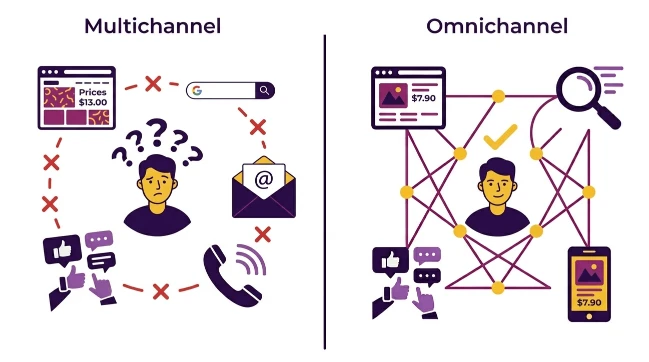
Most mid-size B2B companies don’t have a marketing problem. They have a coordination problem. The website says one thing. The ads say another. The sales team pitches a third version. Email campaigns go out with messaging that doesn’t match any of it.
This isn’t unusual. It happens when marketing gets built in pieces over time, by different people, with no shared strategy connecting the work. You end up with a collection of channels instead of a system.
The result? Your prospective buyer sees your Google Ad, clicks through, doesn’t recognise the landing page, bounces, and your ad budget goes with them.
That’s the problem omnichannel marketing is designed to solve.
What Omnichannel Marketing Actually Means
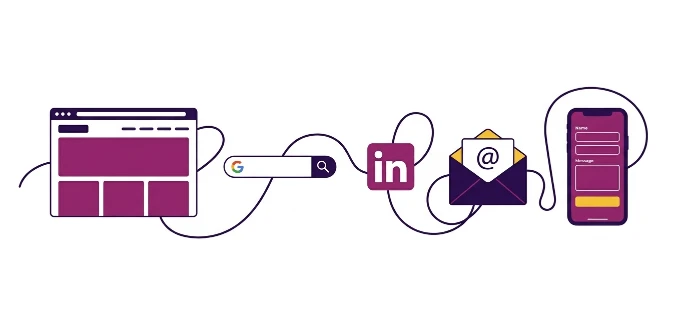
- A project manager searches Google for a specific product category. They find your site through an organic result because the SEO targets the terms they actually use on site.
- They browse your product pages, check a spec sheet, and leave.
- A week later, they see a retargeting ad on LinkedIn with a case study from a similar project in their sector.
- They click through, read the case study, and fill out a contact form.
- Your sales team picks up that lead with full context on what the prospect looked at and when.
That’s omnichannel. Not because you used five channels. Because the channels talked to each other.
How to Apply This Without Blowing Your Budget
So, Does Your Budget Need Omnichannel Marketing?
Frequently Asked Questions
What is the difference between omnichannel and multichannel marketing?
Multichannel marketing means being present across multiple platforms, such as a website, Google Ads, and LinkedIn. Omnichannel marketing goes further by connecting those channels so messaging, data, and the customer experience are consistent across all of them. The difference is coordination, not volume.
Is omnichannel marketing only for large companies?
No. The principles apply to any business running more than one marketing channel. Mid-size manufacturers and distributors can apply omnichannel thinking by connecting their existing channels (website, ads, CRM) with consistent messaging and shared data, without needing enterprise-level software.
How much does omnichannel marketing cost for a B2B company?
It depends on where you’re starting. If you already have a website, Google Ads, and a CRM, the cost is less about new tools and more about strategy, content alignment, and regular reporting. Most mid-size B2B companies can start with their current budget by making existing channels work together more effectively.
What tools do B2B companies need to get started with omnichannel marketing?
You don’t need an enterprise platform to start. Most B2B companies can begin with three things: a CRM to track lead sources and behaviour, Google Analytics to monitor how traffic moves across your site, and a consistent messaging document that every channel follows. From there, add tools only when a specific gap in your data or execution makes them necessary.