
Ai Logos for Business: Risks, Legal Issues & When to Use Them
By Chelsea Light | Founder, Maisona | 7 min read
Generating a logo with AI is fast, cheap, and genuinely impressive at first glance. For many small business owners, it feels like a no-brainer. Type a prompt, get a logo, upload it to your site, job done.
But logos are not just images; they are working assets that form the foundation for your brand.
This article breaks down when using an AI logo is acceptable, when it becomes a liability, and what to do if you already have one in use.
Can I Use an AI Logo for Professional Use?
Yes, technically you can use an AI logo professionally. There is no law stopping you from uploading an AI-generated logo to your website or social profiles.
The real question is not can you, but should you?
AI logos are generally fine for:
- Early-stage ideas or internal concepts
- Side projects or MVPs where branding is temporary
- Placeholder visuals while validating a business idea
The reason these situations work is that the stakes are low and the logo is not load-bearing yet. You are testing an idea, not building a brand. Nobody is going to print it on a truck, file a trademark, or stake their reputation on it. At this stage, speed matter more than craft, and AI delivers speed.
But they are rarely suitable for:
- Established businesses
- Products with physical packaging
- Brands that want legal protection or long-term consistency
Once your logo needs to be printed, scaled, trademarked, or trusted, AI becomes uncertain.
How Can You Tell if a Logo is AI-Generated?
Most designers can spot AI logos almost instantly. Common signs include:
- Overly complex shapes that look good on screen but fail in print
- Perfect symmetry with no design logic
- Strange letter spacing or inconsistent typography
- Gradients used where flat colour is required
- No clear brand system beyond the logo image
Another giveaway is file type. If your logo only exists as a JPEG or PNG, and there are no editable files, it is almost certainly AI-generated.
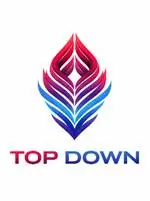
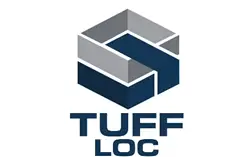
Examples of AI-generated logos:

What Makes a Good Logo?
Key characteristics of a professional logo include:
- Simple – easily recognised and remembered
- Versatile – looks good on billboards or business cards and works in black and white
- Timeless – still looks relevant across decades
- Relevant – aligns with the brand’s industry and audience
- Grounded in design – well balanced, colours that evoke an emotion, and quality typography
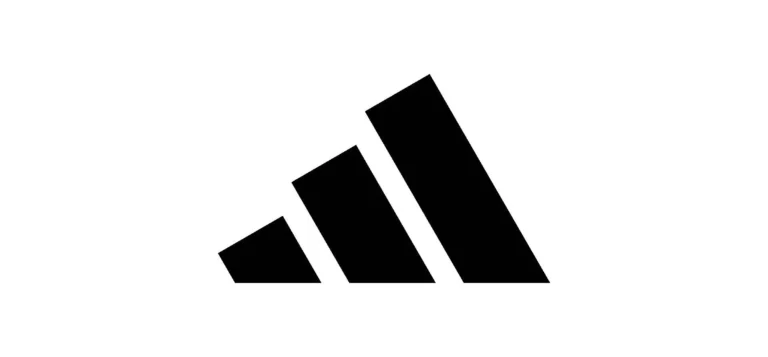
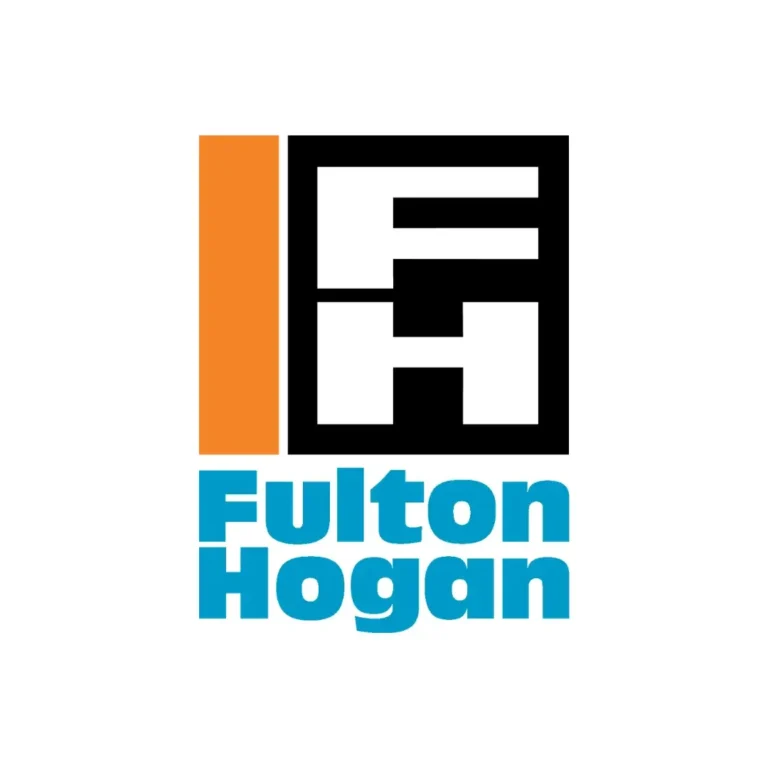
Examples of great, scalable logos:
An AI image is a raster file, meaning it will blur or pixelate when resized. This means you may be limited when you use your logo for applications such as:
- Hats or uniforms
- Embroidery
- Labels with print bleed
- Signage or vehicle decals
Why Does Scalability Matter More Than How Good a Logo Looks?
- In full colour
- In black and white
- At both 16px and at 3 metres wide
- On dark and light backgrounds
Copyright, Legal Use, and Trademarks for Logos
This is where AI logos get genuinely dangerous. Most AI tools do not guarantee originality and do not provide exclusive ownership in a clear legal sense.
In many jurisdictions, you cannot trademark an AI-generated logo unless there is substantial human creative input. That means you may not legally own your logo, and someone else could be using something extremely similar. A trademark application for an AI logo cannot be guaranteed.
Can You Trade Mark an AI-Generated Logo in Australia?
This is where the risk stops being theoretical.
Most business owners assume that if they paid for something like a logo, a design, or a piece of content, they own it. With AI-generated assets and media including logos, that assumption is worth examining carefully before you build a brand around it.
Under Australian law, trade mark ownership requires you to be the owner of the mark at the time of application. The Trade Marks Act 1995 (Cth) gives IP Australia the authority to reject applications where ownership cannot be established.
If your logo was generated by an AI tool with no substantial human creative input, no brief that shaped the composition, no iterative design decisions, no original elements you contributed – then your claim to ownership of that image is genuinely uncertain.
This isn’t an abstract legal debate. IP attorneys in Australia are already fielding questions from businesses whose trade mark applications have been queried because they cannot demonstrate that a human made the creative decisions behind the mark. The logo looked professional. It just wasn’t legally theirs.
For a deeper breakdown of trademark considerations, you can review guidance from IP Australia.
* This section provides general information only and does not constitute legal advice. Trade mark law is complex and fact-specific. If you are considering a trade mark application or have concerns about IP ownership, seek advice from a registered trade mark attorney or IP lawyer.
In the case of Commissioner of Patents v Thaler [2022] FCAFC 62 (The DABUS Case) The Full Federal Court ruled that an “inventor” must be a natural person (a human). While this case specifically concerns patents, it is the primary authority used by IP Australia to justify why other intellectual property rights, like logos or designs, also require a human creator
AI is tool, not a person, therefore cannot be named as an inventor.
How to Check if Your Logo is Already in Use
Before committing to any logo, AI or not:
- Reverse image search it using Google’s image search
- Search your industry and competitors
- Check business name and trademark databases
- Look at international usage, not just local
You should also review how your competitors present themselves online. This is where looking at real-world case studies can help you understand what strong branding actually looks like in your space.
What if You are Already Using an AI logo?
This is where a lot of business owners find themselves — you picked up an AI logo early on, it did the job at the time, and now your business has grown. Here is how to think through it.
If you have been using it publicly for a while, it is worth doing a trademark and reverse image search now if you have not already. The longer you build brand recognition around a logo you do not legally own, the more exposed you are if a conflict arises.
If you have tried to trademark it and been rejected, that is a clear signal to rebuild. Do not keep investing in a mark you cannot protect.
If you like the direction but know it needs work, that is actually the easiest situation to be in. Take the concept to a professional designer and ask them to rebuild it properly, in a design file format such as AI, EPS, or PSD, with colour variations and usage rules. You keep the creative direction you already like, and you end up with something ownable, scalable, and legally sound.
If you are not attached to it at all, now is a good time to start fresh. Think of it as protecting the investment you have already made in building your business. Your logo should be working for you, not creating risk.
In any of these cases, the next step is the same: get a designer involved and get your brand into files you actually own. This helps future-proof your brand and align it with your broader marketing strategy, rather than working against it.
Final Thoughts
AI is an excellent assistant. It is not a brand strategist, legal advisor, or production designer.
If your logo needs to last, scale, and represent your business professionally, invest in getting it done properly. Otherwise, you risk undermining the credibility of your business before it has a chance to grow.
Related Reading

Frequently Asked Questions
Can I legally use an AI-generated logo for my business in Australia
Yes, you can use an AI-generated logo for your business in Australia, there is no law that prevents it. However, using a logo and owning it are two different things.
Most AI tools do not transfer exclusive ownership of the images they generate, which means you may not have the legal right to stop others from using a similar or identical design. For established businesses, this creates real commercial risk, particularly if you are planning to trade mark the logo or use it on physical products.
* This section provides general information only and does not constitute legal advice. Trade mark law is complex and fact-specific. If you are considering a trade mark application or have concerns about IP ownership, seek advice from a registered trade mark attorney or IP lawyer.
Can you trade mark an AI-generated logo in Australia?
Registering an Ai generated logo as a trade mark in Australia is difficult and carries significant risk of rejection. IP Australia requires applicants to demonstrate ownership of the mark, and ownership is harder to establish when there is no evidence of human creative input.
If an examiner raises an objection under the Trade Marks Act 1995 (Cth), you will need to show that a human made the core design decisions, something that is difficult to prove when the logo was produced entirely by a generative AI tool with no design brief, revision history, or editable source files.
What file formats should a professional logo be provided in?
A professional logo should be delivered in vector formats, typically Adobe Illustrator, EPS, or SVG and flatten into WebP, PNG and JPEG versions for digital use.
Vector files are resolution-independent, meaning the logo will scale cleanly from a favicon to a billboard without any loss of quality. They also serve as evidence of human creative authorship, which matters if you ever need to defend a trade mark application. Ai generated logos typically only exist as raster files (JPEG or PNG), which cannot be scaled without degrading and provide no evidence of a creative process.
When is an AI logo good enough, and when do you need a professional designer?
An AI logo is generally acceptable when you are testing a business idea, building an MVP, or working on an internal or temporary project where the stakes are low and branding is not load-bearing.
Once your business is established and trading publicly under the logo, printing it on physical products, or considering trade mark protection, you need a professional designer. The difference is not just quality, it is ownership, scalability, and legal protection. A designer produces files you actually own, in formats that work across every application, with a documented creative process that supports your intellectual property rights.